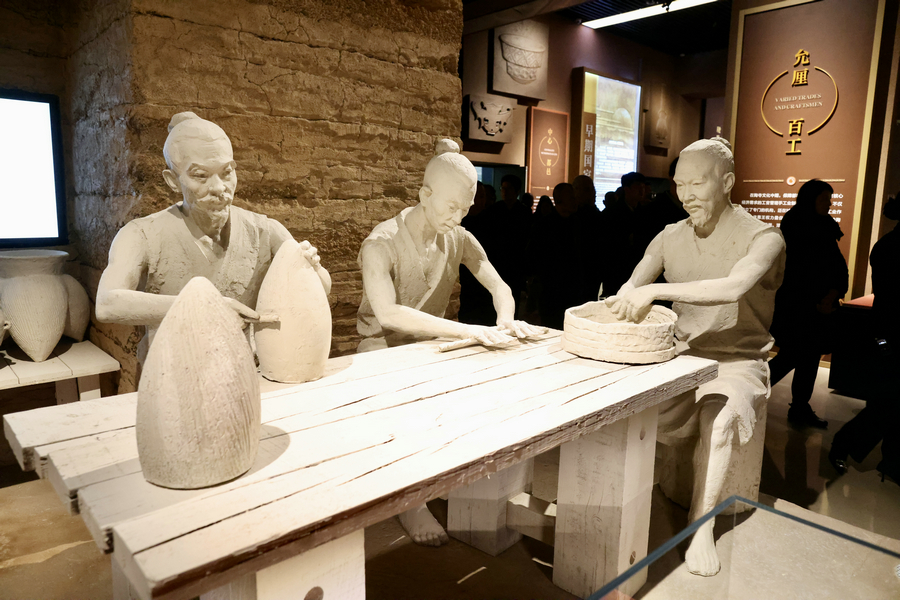
Taosi Site
Introduction
The Taosi site, located in Xiangfen county, Linfen city, Shanxi province, is one of the most significant archaeological sites related to the Longshan culture. The site dates back to approximately 2,300 BC to 1,900 BC, making it a pivotal point of study for understanding early Chinese civilization. First discovered in 1958, Taosi has been the subject of extensive archaeological research since 1978. The site is renowned for its sophisticated urban planning, monumental architecture and cultural artifacts, which provide crucial insights into the social, economic and political structure of its society.
The discoveries at Taosi, including what is considered the earliest observatory in China, reflect the advanced level of civilization present in the region during its time of occupation. The Taosi site covers an area of about 2.8 million square meters, though only a small portion has been excavated so far. Its findings have offered compelling evidence of urbanization and the development of early state societies in the middle reaches of the Yellow River.
Historical Background
Taosi belongs to the Longshan culture, which is characterized by its advanced black pottery and early forms of urbanization. The Longshan culture, dating back approximately 4,000 to 4,600 years ago, was one of the late Neolithic cultures that spread across the Yellow River basin. The Taosi site is particularly important because it provides evidence of the early stages of Chinese civilization, preceding the Xia Dynasty (c. 21st century-16th century BC) by a few hundred years.
Historical legends link Taosi to the rule of the legendary King Yao, suggesting it may have served as a capital during his reign. Archaeologists have linked the urban structure and ceremonial artifacts found at Taosi to descriptions in ancient Chinese texts, lending credence to these historical accounts. The site's strategic location in the Yellow River's middle reaches facilitated its role as a center of political, economic and cultural activity during its peak. The evidence of complex social structures, such as differentiated burial practices and the presence of elite residences and palaces, highlights the sophisticated nature of Taosi society.
Archaeological Discoveries
Excavation History
The discovery of the Taosi site in 1958 marked the beginning of a series of archaeological explorations that would significantly enhance our understanding of Neolithic China. Systematic excavations began in 1978 and have continued intermittently, led by teams from the Chinese Academy of Social Sciences and local archaeological institutions. The site's findings have continually challenged and expanded previous conceptions of early Chinese history.
Over 5,500 artifacts have been unearthed, including pottery, jade, bone and bronze ware, each providing unique insights into the daily lives and spiritual beliefs of the Taosi inhabitants. Excavations have revealed the remnants of a walled city with zones for palaces, residential areas for both nobility and commoners, handicraft workshops and ceremonial sites. These discoveries have not only illuminated the sophistication of Taosi's urban planning but have also underscored its role as a significant cultural and political center.
Major Findings
Among the most notable discoveries at Taosi is the observatory, considered the earliest known in China. This structure, composed of 13 rammed earth columns arranged in a semicircular pattern, provided a means to observe solar movements and determine agricultural cycles. The site has also yielded various burial items, including a painted pottery plate depicting a dragon, the oldest dragon image found in the Central Plains.
This artifact offers valuable clues about the origins of dragon symbolism in Chinese culture. Additionally, the discovery of ceremonial musical instruments, such as chime stones and wooden drums, indicates the importance of music and ritual in Taosi society. The architectural remains of palaces and elite residences, with features such as central axes and fortified enclosures, reflect advanced concepts of urban planning and governance.
Cultural Significance
The Taosi site is a cornerstone for understanding the emergence of Chinese civilization. Its urban complexity, social stratification and rich material culture highlight the sophisticated nature of the society that thrived there. The site exemplifies a shift towards centralized state structures, with evidence of political, economic and ceremonial functions integrated within its urban landscape. The artifacts and architectural remains reflect a society that valued astronomical observation, ritual music and social hierarchy.
The presence of dragon motifs in Taosi art signifies the early development of dragon totems, which would become a central element of Chinese cultural identity. The findings at Taosi contribute to a broader understanding of the diverse and interconnected nature of early Chinese civilization, emphasizing the region's role as a focal point of cultural innovation and exchange.
Research and Analysis
Chronology
The Taosi site dates from approximately 2,300 BC to 1,900 BC, situating it within the late Neolithic period. This timeframe places Taosi at a juncture preceding the Xia Dynasty, traditionally considered the first dynasty in Chinese history. The cultural phases observed at Taosi correspond with the spread of the Longshan culture across northern China, noted for advancements in pottery, metallurgy and social organization. Radiocarbon dating has been instrumental in establishing the chronological framework of the site, allowing researchers to connect its developments with broader regional trends in early Chinese history.
Artifacts
Artifacts uncovered at Taosi reflect a complex society with diverse cultural practices. Pottery items, including intricately decorated plates and storage vessels, demonstrate advanced ceramic techniques and aesthetic sensibilities. Jade artifacts, often associated with high-status individuals, suggest the social stratification and ritual significance attributed to these items. The discovery of bronze ware, including sacrificial vessels and weaponry, points to the development of metallurgy and its role in ceremonial and military contexts. Bone and wooden artifacts, alongside musical instruments like chime stones and drums, indicate the cultural importance of music and ritual in Taosi society.
Architectural Structures
The architectural remains at Taosi reveal a well-organized urban layout, with distinct zones for residential, ceremonial and industrial activities. The remnants of palaces and elite residences suggest a hierarchical society with centralized governance. The observatory, with its carefully aligned columns, highlights the integration of astronomical knowledge into the daily and ritual life of the community. The site's fortifications and city walls indicate a need for defense and control over the surrounding territory, reflecting the political complexities of the time. These architectural features provide crucial insights into the technological and organizational capabilities of Taosi's inhabitants.
Preservation Efforts
Efforts to preserve and conserve the Taosi site are ongoing, reflecting its importance as a cultural and historical treasure. The establishment of the Taosi Relics Site Museum and the implementation of protective measures aim to safeguard the site's integrity and facilitate public access to its rich heritage. Preservation initiatives focus on stabilizing the site's structural remains, preventing environmental degradation and promoting sustainable tourism practices. Collaboration between local authorities, academic institutions and international organizations plays a crucial role in ensuring the long-term preservation of Taosi's archaeological and cultural resources.








